What Hot Tub Error Codes Actually Mean
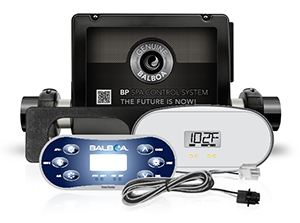
When your hot tub display flashes a cryptic code, it's easy to assume the worst. Error codes are safety messages, not death sentences. Your spa's control system (typically a Balboa, Gecko Alliance, or Hydro-Quip board) monitors water flow, temperature, and sensor readings in real time. When something falls outside safe parameters, the system shuts down the heater to protect components from dry-fire or overheating damage.
Here's the key distinction most owners miss: the control system brand generates the code, not the hot tub brand. A Beachcomber, Hydropool, or Arctic Spa may all use the same Gecko board underneath.
Most codes turn out to be false alarms triggered by a dirty filter or low water level, not failed hardware. Codes also escalate: ignore an early LF (Low Flow) warning, and you'll eventually face a full FLO or DRY shutdown. Catching issues early saves money and stress.
FLO, FL, FL1, FL2: Flow Errors (The Most Common Code)
FLO is the error code you're most likely to encounter. It means the control system cannot detect enough water moving through the heater assembly, so it shuts the heater off to prevent a dry-fire situation. The good news? More than 80% of FLO errors trace back to a dirty or clogged filter, not a failed pump or sensor.
Three Free Fixes to Try First
-
Clean or rinse the filter. A filter packed with months of debris restricts flow enough to trip the pressure switch. Remove it, rinse it thoroughly with a garden hose, and reinstall. If it's older than 12 to 24 months, replace it entirely.
-
Check the water level. The ideal level is about 1 inch above the top jets and 1 inch below the headrest. Low water allows air bubbles into the plumbing, which confuses the flow sensor.
-
Power cycle the spa. Turn the breaker off for 30 seconds, then turn it back on. This clears temporary glitches in the control board.
Related Flow Codes
LF (Low Flow) is the early-warning version of FLO. The heater may still run intermittently, but the system is signalling that flow is marginal. Catching LF early prevents a full FLO shutdown.
FLC means the flow switch is stuck in the closed position even when water isn't moving. This is usually caused by debris lodged inside the switch or a failed switch altogether.
DR or DRY is the most urgent flow-related code. The heater has detected a dry-fire condition with no water surrounding the element. Stop using the spa immediately and inspect the filter, water level, and pump operation before resetting.
Cost Context
A replacement pressure switch typically costs $30 to $80 CAD when you install it yourself. Compare that to a $150 to $300 CAD service call for the same repair. Diagnosing the issue yourself is almost always worth the effort before calling a technician.
OH, OHH, OHS: Overheating Errors
OH means the water temperature has exceeded the high-limit shutoff threshold, typically set between 108°F and 118°F depending on your control system. The heater shuts down immediately to prevent scalding and component damage.
A dirty filter is the primary culprit. Restricted flow causes water to linger too long in the heater tube, pushing the temperature past the safety limit. Other causes include direct sunlight heating the spa cover, high ambient temperatures during summer heat waves, or a failed high-limit sensor giving false readings.
First Steps
- Remove the cover and let the water cool naturally.
- Clean or replace the filter.
- Make sure all jets are open and water is circulating freely.
If OH returns immediately after clearing, the high-limit sensor itself may need replacement. These sensors typically cost $20 to $60 CAD and are a manageable DIY swap.
Canadian seasonal note: OH codes spike during summer heat waves, especially in southern Ontario and the BC interior. If your spa sits in full sun, consider a shade structure or simply prop the cover open during peak afternoon heat to let excess warmth escape.
SN, Sn1, Sn2, SNA, SNB: Sensor Errors
SN codes almost always point to a temperature sensor or high-limit sensor fault, not a heater failure. When a sensor fails, it reads an impossible temperature (extremely high or extremely low), and the control system triggers a safety shutdown.
Common causes include loose wire connections at the sensor plug, corroded terminals, or a fully failed thermistor. Before ordering a replacement part, always check the wire connections first. Unplug the sensor connector, inspect for corrosion or green buildup on the terminals, and reseat the connection firmly.
If the wiring checks out and the code persists, the sensor itself likely needs replacing. Replacement temperature sensors run $20 to $60 CAD and are one of the more straightforward DIY repairs on a hot tub.
One often-overlooked factor: poor water chemistry accelerates sensor corrosion. Running your spa with a pH below 7.2 will degrade sensor housings and terminals over time, making SN codes a recurring problem.
ICE, FrE: Freeze Protection Codes (Critical for Canadian Owners)
If you're running a hot tub through a Canadian winter (and millions of Canadians do), you may see ICE or FrE on your display. These codes activate when the water temperature drops near or below 40°F, engaging the spa's built-in freeze protection system.
In most cases, no user action is required. The system is working exactly as designed, circulating water through the plumbing to prevent pipes from freezing and cracking. Balboa systems display ICE, while Gecko Alliance systems (common in Canadian-manufactured hot tubs like Hydropool and Arctic Spa) display FrE. Different label, same protective logic.
If FrE appears during mild weather when freezing isn't a concern, a faulty temperature sensor may be mimicking a low-temperature reading. In that case, treat it as an SN-type issue and inspect the sensor.
Preventive tips for Canadian owners: Make sure your spa cover is in good condition with intact foam cores that insulate properly. Keep water in the spa year-round rather than draining it for winter. An empty spa is far more vulnerable to freeze damage than a running one.
Watchdog Mode and When to Call a Professional
If your Balboa display shows dashes ("– –") or dots ("… …"), your spa has entered Watchdog mode. This is a critical safety lockout indicating a serious electrical or sensor fault. Unlike FLO or OH, Watchdog mode cannot be resolved by cleaning a filter or power cycling the system. Professional diagnosis is required.
DIY vs. Pro Decision Framework
-
DIY-friendly: FLO, OH, or SN codes with a dirty filter, low water level, or loose wire connection.
-
Call a technician: Recurring codes that return immediately after clearing, Watchdog mode, burning smells, or tripped breakers.
Hot tub repairs average $181 to $567 CAD, and technician labour runs $75 to $200 CAD per hour with a $100 to $200 CAD minimum service call fee. If a code keeps returning after you've addressed the obvious causes, treat it as a hardware fault. Do not keep resetting and running the spa, as this risks further damage.
For owners confident in DIY repairs, Pool Store Canada carries replacement sensors, pressure switches, and flow switches from brands like Balboa, Gecko, and Waterway, shipped fast from our Vancouver and Calgary warehouses.
Quick Reference: Top Hot Tub Error Codes at a Glance
| Code |
What It Means |
First Fix |
| FLO / FL / FL1 / FL2 |
Insufficient water flow through heater |
Clean filter, check water level, power cycle |
| LF |
Low flow (early warning) |
Clean filter, check water level |
| FLC |
Flow switch stuck closed |
Inspect or replace flow switch |
| DR / DRY |
Dry-fire condition detected |
Stop use immediately; check filter, water level, pump |
| OH / OHH / OHS |
Water temperature exceeded safe limit |
Remove cover, cool water, clean filter |
| SN / Sn1 / Sn2 |
Temperature or high-limit sensor fault |
Check sensor connections; replace if corroded |
| ICE (Balboa) / FrE (Gecko) |
Freeze protection activated |
Usually no action needed; check sensor if no freeze risk |
| Watchdog (– – / … …) |
Critical safety lockout |
Call a qualified technician |
|
E90 (inflatable) |
No water flow |
Clean filter, check pump connection |
|
E95 (inflatable) |
Overheating (122°F) |
Remove cover, cool water |
|
E96 (inflatable) |
Temperature sensor issue |
Check sensor; contact manufacturer |
Gecko and Balboa systems use similar logic but different display labels. Before troubleshooting, identify your control panel brand (usually printed on the topside display or inside the equipment bay).
Rinsing your filter every 1 to 2 weeks and replacing it every 12 to 24 months prevents the majority of these codes from ever appearing. DIY maintenance costs roughly $10 to $30 CAD per month compared to $50 to $200 CAD per month for professional service. Staying on top of filter and water care pays for itself many times over.
Prevent Error Codes Before They Appear
Water chemistry is the most overlooked root cause of hot tub error codes. Low pH corrodes sensors and their housings. High calcium hardness clogs heater tubes and restricts flow. Both conditions create the exact problems that trigger FLO, OH, and SN codes.
Keep your pH between 7.4 and 7.6, maintain proper calcium hardness and sanitizer levels, and test your water at least twice a week. These small habits protect your sensors and heating elements from premature failure.
Stick to a filter maintenance schedule: rinse every 1 to 2 weeks, deep clean monthly, and replace every 12 to 24 months. This single habit prevents over 80% of FLO and OH codes.
Finally, maintain the correct water level (1 inch above the top jets, 1 inch below the headrest) to keep air out of the flow sensor. A well-maintained hot tub can last 5 to 20 years. Addressing error codes early and preventing them in the first place is the single best way to protect that investment.